
Last updated November 2, 2026
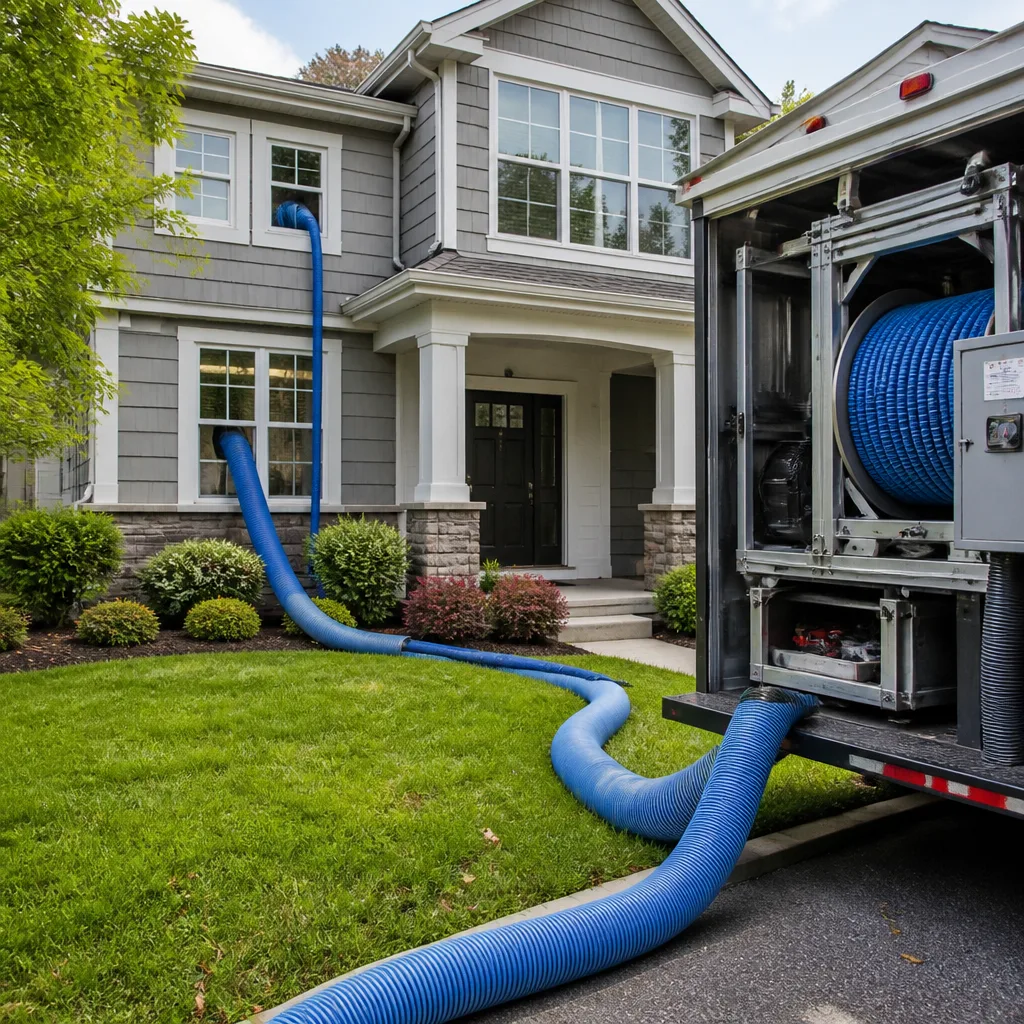 Whole-home duct cleaning
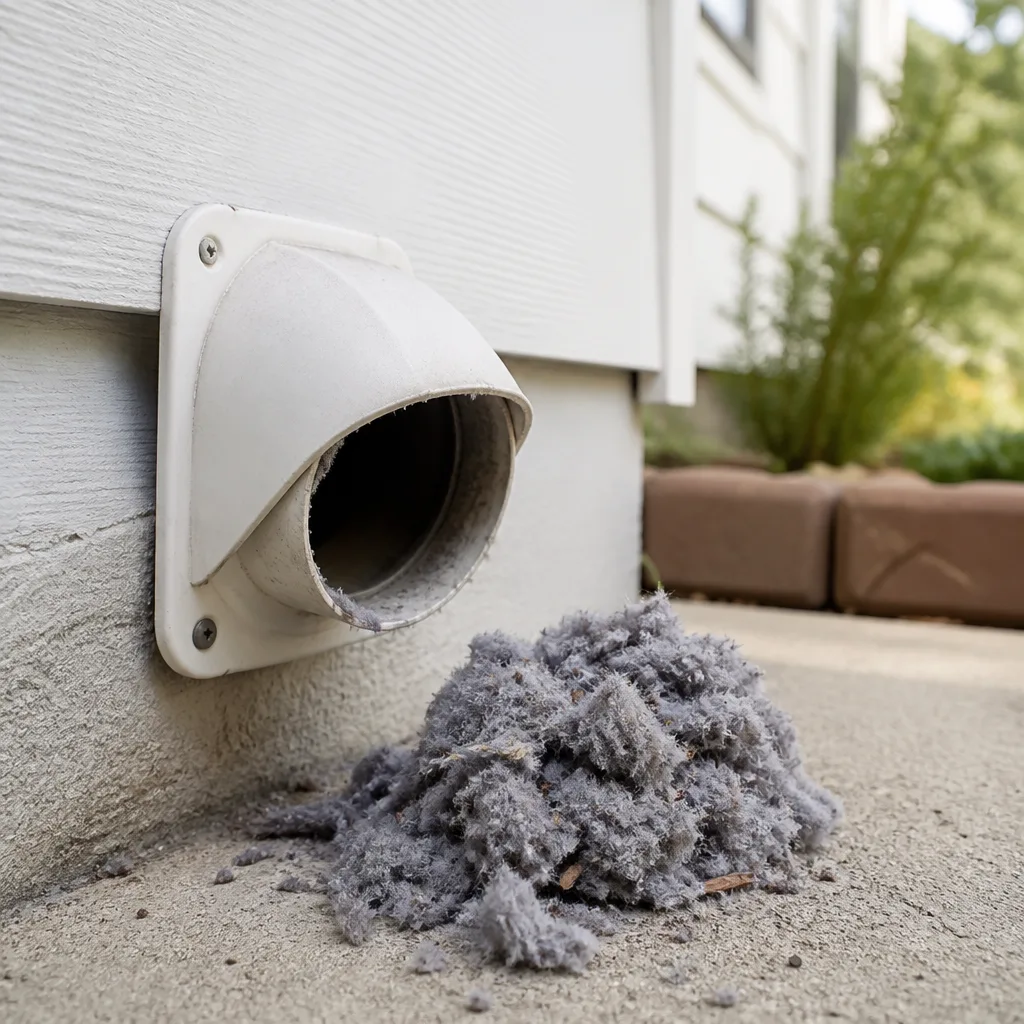 Dryer vent cleaning
 Camera inspection
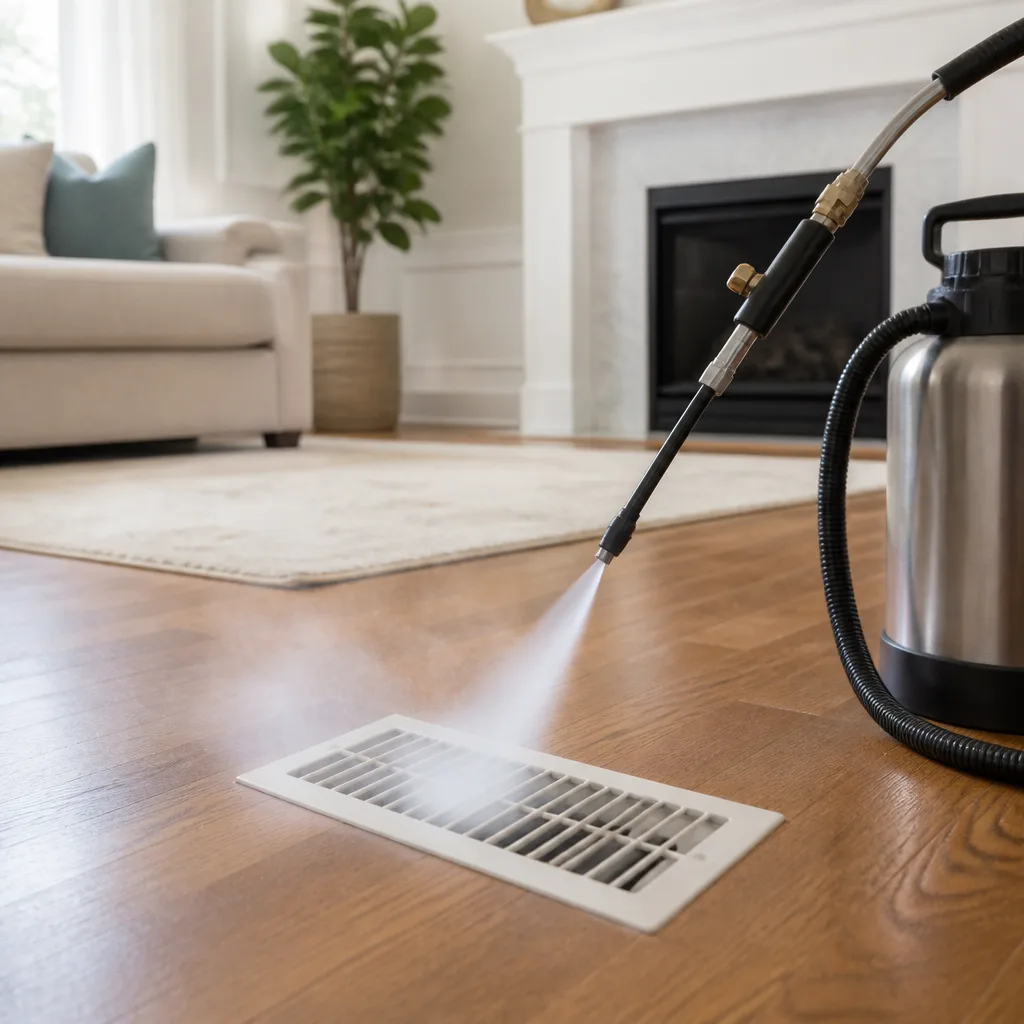 Sanitizing & deodorizing
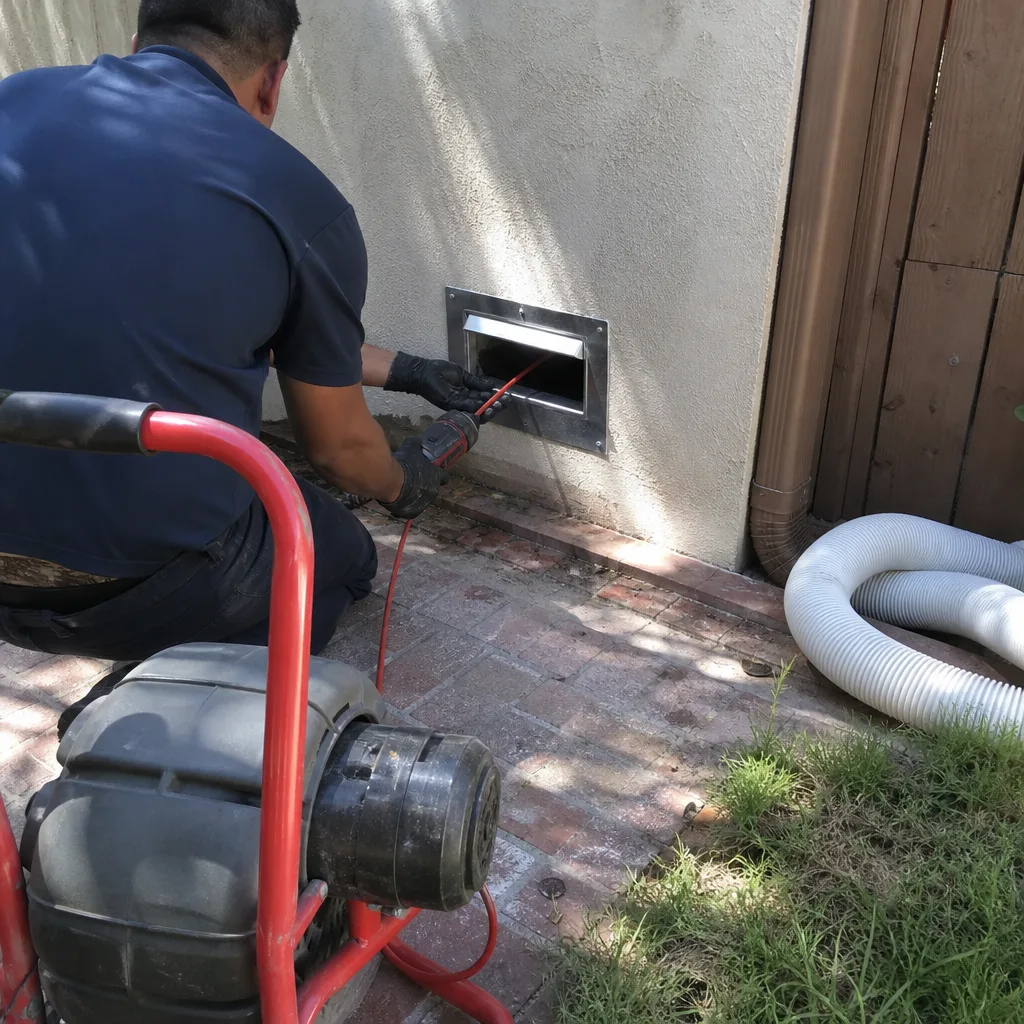
Whole-system duct and dryer vent check with before-and-after photos - you see exactly what came out of your vents
That "$99 whole-house special" is a bait ad - the real number appears once they are in your hallway, or the "clean" is a shop-vac at the register. We photograph the inside of your ducts before and after instead.
Seasonal Air Duct Cleaning Care for Rancho Park: Year-Round Homeowner’s Guide
Here’s a counterintuitive fact about living in Rancho Park: the air inside your home is often dirtier than the air outside, even in a neighborhood known for tree-lined streets and well-kept mid-century homes. The reason is simple. Your duct system acts as a collector, and over the course of a year it accumulates layers of whatever the local climate throws at it. In Rancho Park, that means wildfire ash, Santa Ana dust, and the occasional damp spell during June Gloom. Most homeowners never think about their ducts until they smell something odd or notice dust settling on furniture within days of cleaning. This guide walks through what actually happens to your ducts across all four seasons here, what to watch for, and when seasonal maintenance genuinely matters versus when it’s a waste of money.
Quick Answer
Seasonal air duct cleaning in Rancho Park is not a year-round necessity, but it is strategically valuable at two specific points: early spring before fire season intensifies, and late fall after Santa Ana winds have deposited significant dust and ash. Homeowners should inspect their ducts after any major wildfire smoke event regardless of season, replace filters more frequently during high-particulate months, and schedule a professional cleaning when visible dust accumulation, persistent odors, or reduced airflow indicate the system is carrying more than it should.
Styles & brands we work with
- Whole-home duct cleaning
- Dryer vent cleaning
- Camera inspection
- Sanitizing & deodorizing
Table of Contents
- What the Seasons Actually Do to Rancho Park Ducts
- Pre-Fire-Season Preparation: The Spring Window
- Wildfire Smoke Intrusion: What to Do After a Nearby Fire
- June Gloom and the Hidden Humidity Window
- Post-Santa-Ana Assessment: What Heavy Wind Carries In
- The Late-Fall Heating System Startup Check
- Filter Strategy for Rancho Park’s Particulate Events
- How Often Should You Actually Clean Ducts in Rancho Park?
What the Seasons Actually Do to Rancho Park Ducts
Rancho Park sits roughly four miles inland from the Pacific, which means our seasonal patterns don’t match what national guides assume. We don’t deal with frozen pipes or furnace season in the way a Minneapolis homeowner would. What we do deal with, every year without fail, is a predictable cycle of particulate loading, occasional smoke events, and a brief but real humidity window that most residents never connect to their ductwork.
Here’s the seasonal pattern we see in duct systems across Rancho Park, Cheviot Hills, and the Westside corridor:
- Spring: Moderate temperatures mean HVAC systems run intermittently, giving dust time to settle and accumulate inside ducts. This is also the pre-fire-season window when preparation makes sense.
- Summer: Heavy AC use draws outside air through the system continuously. If nearby fires occur, smoke and ash get pulled into return ducts and distributed through the home. Even without fires, fine dust from dry conditions accumulates faster than most homeowners expect.
- Fall: Santa Ana winds arrive with dry, gusty conditions that push dust, pollen, and particulate matter into exterior vents and air intakes. This is the single largest contamination loading period of the year.
- Winter: Intermittent heating use means the system cycles less frequently. Anything that settled in during fall sits there, and when the heat kicks on, it gets baked and blown through living spaces.
The pattern matters because it tells you when to act. Cleaning in January, for example, addresses the aftermath of Santa Ana season but means your system is already clean when spring arrives and the cycle starts again. Cleaning in October, right before heating season and after the worst wind loading, gives you the longest benefit window. Our Air Duct Cleaning in Rancho Park service follows this logic: timing the work when it delivers maximum value, not just when it’s convenient to schedule.
Pre-Fire-Season Preparation: The Spring Window
If you only do one thing for your duct system all year, do it in spring. Here’s why: once fire season begins in earnest, typically by June or July, the window for meaningful preparation has essentially closed. You don’t want to discover a compromised duct system in August when smoke is already in the air and every HVAC company in Los Angeles is booked solid.
Spring is the ideal time to assess, clean, and prepare for what’s coming. Here’s what a pre-fire-season check should involve:
- Inspect all visible ductwork and registers. Remove two or three supply registers and look inside with a flashlight. If you see gray dust accumulation, pet hair, or what looks like sand, the system is carrying debris.
- Check your return air grille. The return side pulls in everything from your living space. A heavily caked return grille means that debris is cycling through the system continuously.
- Evaluate filter condition. If your filter looks loaded after only a month, your system is pulling in more particulate than it should, and you may have leaky return ducts.
- Schedule a professional duct cleaning if you haven’t had one in two or more years. Starting fire season with clean ducts means less surface area for smoke particles to adhere to when and if they enter the system.
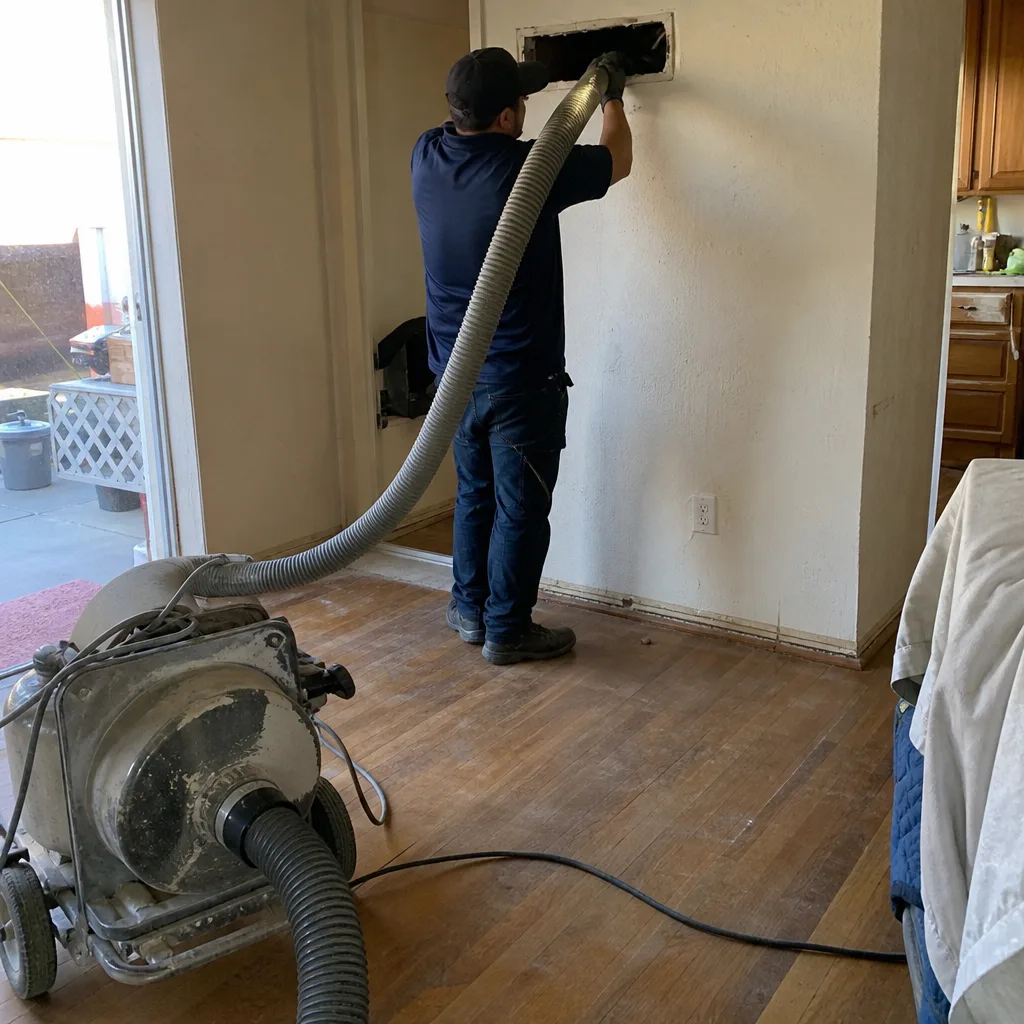
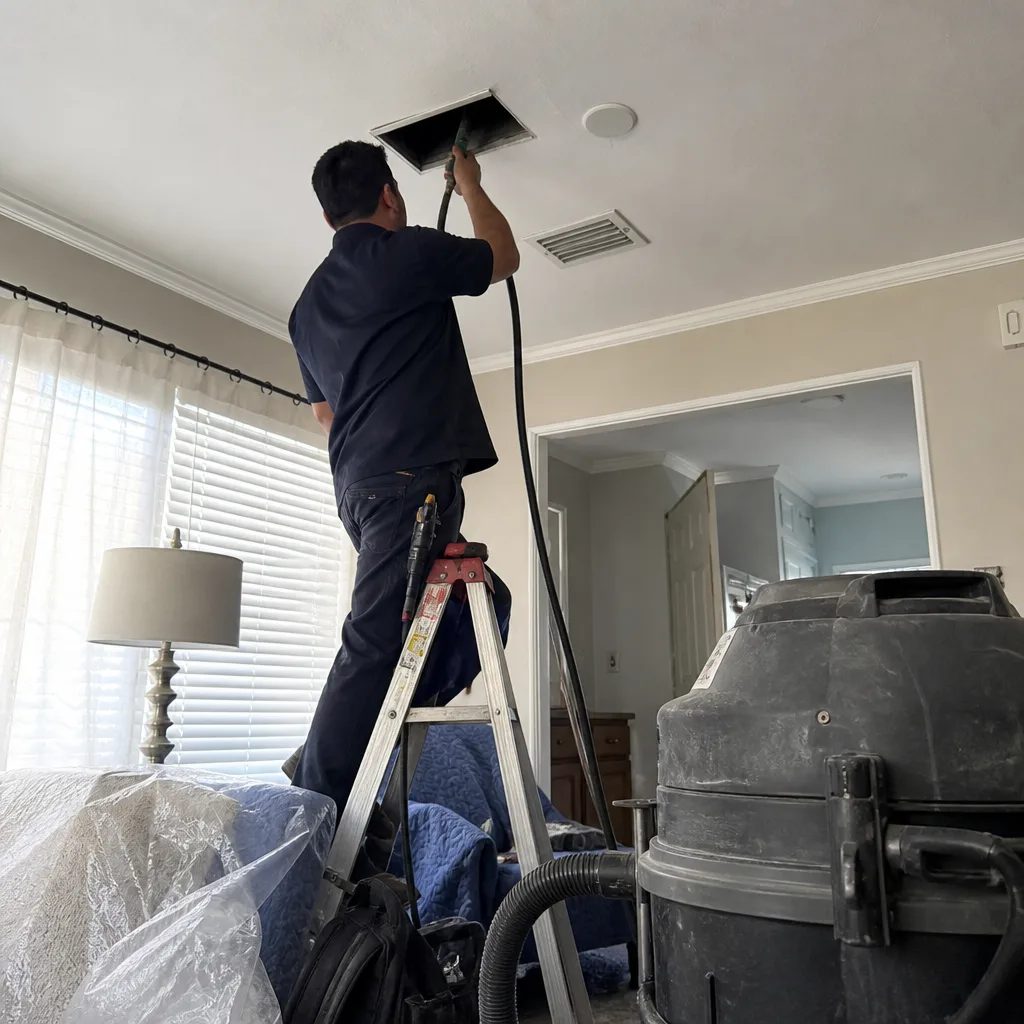
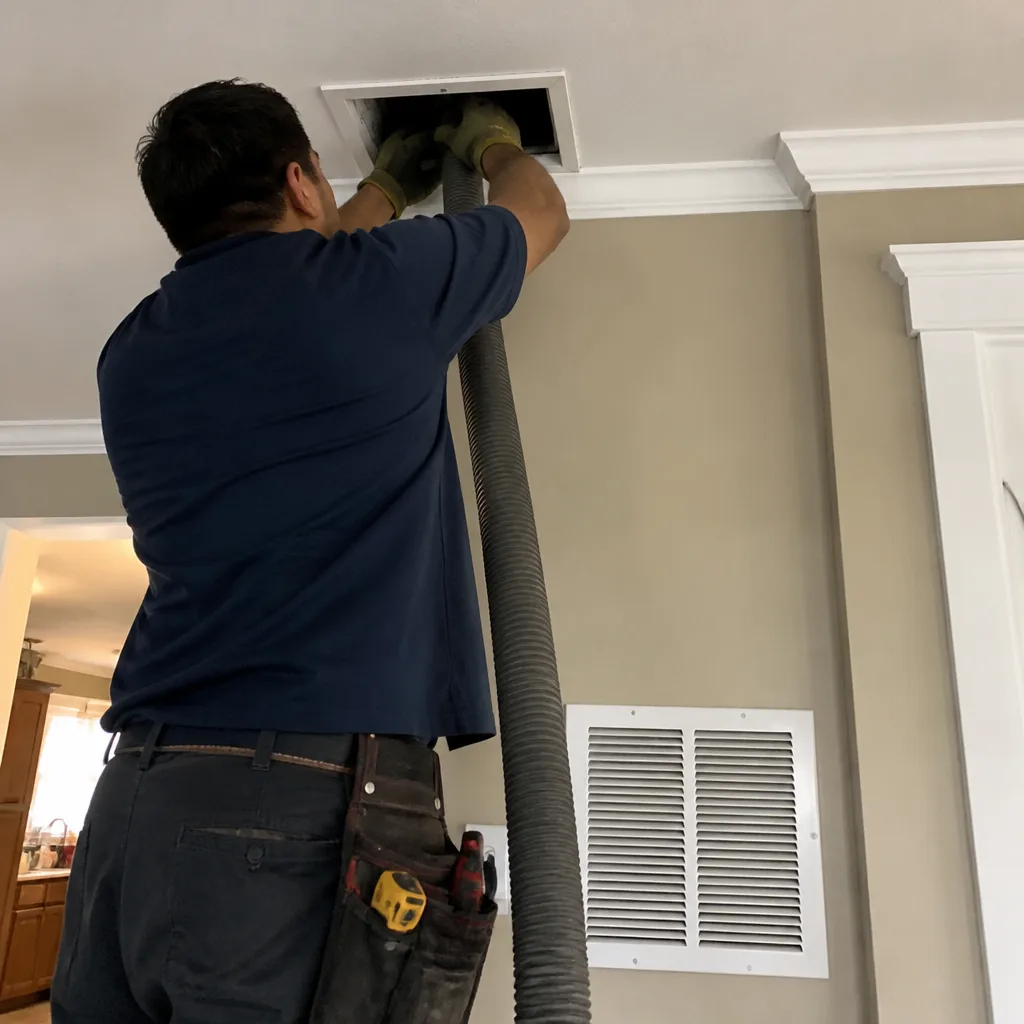
We take a different approach than most companies on this. Rather than a quick vacuum pass, we use professional-grade Rotobrush and Nikro duct cleaning systems, the same equipment specified by industrial hygienists for remediation work. We also run Abatement Technologies negative-air containment during the job, which keeps dislodged debris from redistributing through your home while we work. The result is a system that’s actually clean, not one that’s been superficially brushed.
One more spring consideration: repair. If your ductwork has loose connections, gaps at boots, or damaged sections, those are entry points for smoke and ash later in the year. We offer Air Duct Repair in Rancho Park as a standalone service, because cleaning a duct system with visible gaps is like mopping a floor while a window is open during a dust storm. The problems just come right back.
Wildfire Smoke Intrusion: What to Do After a Nearby Fire
Here’s the scenario we hear most often from Rancho Park homeowners: a fire burns somewhere in the Santa Monica Mountains or further east, smoke hangs over the Westside for days, and the house smells like a campfire. The air clears eventually, but the smell lingers inside. That lingering smell is often coming from the duct system.
Smoke particles are extremely fine, typically under 2.5 microns, which means they pass through most standard HVAC filters without much resistance. Once inside the duct system, they adhere to dust, debris, and even the interior surfaces of the ductwork itself. The smell persists because those particles remain trapped, getting re-circulated every time the system runs.
Here’s how to assess whether smoke has actually compromised your ducts, beyond just the smell in the air:
- Run the system and smell each supply register. If the campfire smell is consistently stronger when air is actively blowing, the ducts are holding smoke residue.
- Check the filter. A filter that’s gray or brown within days of a smoke event, when it was clean before, confirms smoke particulates are moving through the system.
- Look at the return grille. Smoke residue often shows up as a fine gray film on the grille vanes and surrounding wall area.
- Check for visible ash accumulation. In severe events, fine white or gray ash can settle inside supply registers and be visible when you remove the grille cover.
If your system has been through a significant smoke event, a professional cleaning is the most effective way to remove the residue. Vacuuming registers helps surface-level, but it can’t reach the interior walls of the duct runs. The combination of agitation from a Rotobrush or Nikro system and negative-air extraction is what removes smoke residue from the entire length of the ductwork, not just the first foot or two.
We recommend addressing smoke intrusion sooner rather than later. Smoke particles are acidic, and the longer they sit on metal or flex duct surfaces, the more likely they are to cause odor retention that becomes progressively harder to eliminate.
June Gloom and the Hidden Humidity Window
June Gloom is a Rancho Park reality. The marine layer settles in, mornings are overcast and damp, and the air feels heavier than it does at any other point in the year. For most homeowners, it’s just a weather annoyance. For your duct system, it’s a brief but genuine mold-risk window.
Here’s the mechanism: mold requires three things to grow, and June Gloom in Rancho Park provides all three. There’s a food source, which in ducts is typically accumulated dust and organic debris. There’s a temperature range that supports growth, and interior duct temperatures in June are well within that range. And there’s moisture, which arrives via the elevated relative humidity the marine layer brings. When those three conditions overlap, mold can establish in duct interiors, especially along the inside of supply boots and in areas where dust has accumulated on damp surfaces.
What to watch for during June Gloom:
- Musty odor from registers when the AC first starts. This is often the first indicator that something is growing inside the system.
- Visible dark staining around supply registers or on duct surfaces visible through the grille. This is not something to handle yourself. If you see this, call a professional.
- Increased allergy symptoms among household members that seem to improve when the system is off or when you’re away from home.
The good news is that June Gloom in Rancho Park is typically too brief for extensive mold growth to become established. The real risk is in systems that already have significant dust and debris accumulation before the humidity arrives. Clean ducts with minimal organic material have very little mold risk, even during the dampest weeks. Dirty ducts with years of accumulated dust have much more risk.
This is another argument for spring cleaning. If your ducts are clean before June Gloom settles in, the humidity window is a non-event. If they’re carrying years of accumulated material, June is the month that material can turn into something more problematic. The Air Duct Cleaning Rancho Park home page explains our approach in more depth, but the short version is that we treat dust accumulation as something to address proactively, not something to wait on until it becomes a larger problem.
Post-Santa-Ana Assessment: What Heavy Wind Carries In
Santa Ana winds are the single largest particulate loading event of the year for Rancho Park homes. The combination of high winds, extremely low humidity, and dust from the high desert creates conditions where fine particulate matter gets pushed into every exterior opening on a house: window frames, door seals, attic vents, and crucially, HVAC intake points.
What many homeowners don’t realize is that Santa Ana winds don’t just push dust into your home. They also create negative pressure zones around the house that can pull air through duct leaks, attic duct runs, and crawlspace access points. This means the dust loading is not limited to what enters through open windows. Your duct system is actively pulling in outside air during high-wind events, and that air is carrying particulate matter with it.
Here’s our recommended post-Santa-Ana assessment, ideally done in late October or early November after the first few significant wind events of the season:
- Inspect exterior vents and the condenser unit area. Heavy dust accumulation around exterior vents suggests significant intrusion has occurred.
- Remove a supply register and check for visible dust. Fresh dust that appears light tan or gray is consistent with Santa Ana particulate.
- Feel the interior of the duct with a clean white cloth. If it comes away gray, the system is carrying wind-blown particulate.
- Listen for unusual system behavior. Dust accumulation on blower components can cause imbalance and noise.
- Change the filter regardless of how it looks. Santa Ana particulates can load a filter to capacity in a matter of days even when it looks only modestly dirty.
If your assessment suggests significant dust loading, this is the time for a professional cleaning. We see the same pattern every year in Rancho Park: homeowners who schedule cleaning in October after the first Santa Ana events enter winter with clean systems, while those who postpone until January spend the heating season circulating dust that’s been collecting since September.
The Late-Fall Heating System Startup Check
The first day you switch from AC to heat is one of the most informative moments of the year for your duct system. Everything that’s accumulated since your last cooling season, all the dust, all the pet dander, all the Santa Ana particulate, gets its first real blast of hot air, and the results are immediately noticeable.
Here’s what to do when you first run the heat in late fall:
- Listen for a burning smell. A brief smell the first time the heat comes on is normal; it’s dust burning off the heat exchanger. What’s not normal is that smell persisting for more than 30 to 60 minutes. If it continues, your duct system is likely distributing accumulated dust rather than simply clearing surface-level residue.
- Watch for dust discharge from supply registers. Turn off lights and shine a flashlight beam across the register while the system is running. If you see a steady stream of particles in the beam, the ducts are actively dispersing debris.
- Check for uneven heating between rooms. If some rooms heat normally while others stay cold, the issue may be duct restriction from accumulated debris, not an HVAC problem.
- Smell each register separately. The heating cycle can activate odors that were dormant during summer. A dusty or stale smell from specific registers often indicates localized debris accumulation in those duct runs.
We’ve walked into Rancho Park homes where the homeowners assumed their system was failing because of poor heating performance, when the actual problem was a decade of accumulated debris restricting airflow. A cleaning with our Nikro or Rotobrush systems restored normal airflow without any mechanical work on the HVAC unit itself. It’s a good example of why Air Duct Repair in Rancho Park and cleaning are complementary: sometimes the fix is cleaning, sometimes it’s repair, and sometimes it’s both, but the diagnosis should start with what’s actually happening inside the ducts.
Filter Strategy for Rancho Park’s Particulate Events
Filters are the first line of defense against particulate intrusion, and in Rancho Park’s climate, the standard advice of “change your filter every 90 days” is insufficient during certain seasons. Here’s a seasonally adjusted approach that accounts for local conditions.
One important note before getting into specifics: filter ratings are not a simple “higher is better” situation. Higher-rated filters like MERV 11 and MERV 13 capture more particles, which is exactly what you want during smoke season, but they also increase static pressure in the system. A filter with too high a rating for your blower’s capabilities can reduce airflow to the point where the system runs inefficiently or even damages components over time. If you’re not sure what your system can handle, check the manufacturer specifications or have a professional assess it.
With that caveat in mind, here’s our seasonal filter guidance for Rancho Park:
- Spring (March to May): MERV 8 is generally adequate. Replace every 60 to 90 days depending on household dust load and pet count.
- Summer (June to August): MERV 8 to MERV 11. Replace monthly during active fire season, especially if smoke is visible or detectable in the air.
- Fall (September to November): MERV 11 recommended during Santa Ana season. Replace after major wind events, even if the filter is less than 30 days old.
- Winter (December to February): MERV 8 is adequate for most homes. Replace every 60 to 90 days, adjusting for household specifics.
Some homeowners with allergy sensitivities choose to install Honeywell media cabinets or Aprilaire whole-home filtration systems, which accept higher-rated media with less static pressure penalty than a standard filter slot. We’re familiar with both product lines and can advise on what’s compatible with your particular system. The important thing is to match the filtration to your actual needs and your system’s capabilities, not just to buy the highest number on the shelf.
How Often Should You Actually Clean Ducts in Rancho Park?
No honest answer to this question is a single number. Rancho Park’s climate conditions mean that two homes a block apart can have very different needs depending on household composition, system usage patterns, and whether the home has been through recent renovation or smoke events. Here’s a framework for thinking about it rather than a one-size-fits-all rule.
As a general baseline, we recommend professional cleaning every 3 to 5 years for most Rancho Park homes. That range shortens to every 2 to 3 years for households with:
- Multiple pets, especially dogs and cats that shed heavily
- Residents with significant allergies, asthma, or other respiratory sensitivities
- Homes that have undergone renovation, which produces large amounts of drywall dust that gets pulled into return ducts
- Homes within a few blocks of major construction activity
- Systems that have experienced smoke intrusion from nearby fires
Heavy AC use in late summer also matters. A home that runs AC continuously from July through September pulls far more outside air through the system than one that relies on open windows and ceiling fans. That outside air carries particulate matter from the dry summer landscape, and without rain to knock it down, that material accumulates in the ductwork.
If you’re trying to figure out where your home falls on the spectrum, start with an inspection. Pull a register, look inside, and use the assessments outlined in earlier sections. If you see accumulated dust, smell mustiness or smoke residue, or notice dust settling on furniture within days of cleaning, your system is telling you something. The frequency question becomes much easier to answer when you know what your ducts actually look like.
We also handle Dryer Vent Cleaning in Rancho Park as a dedicated service, and we recommend checking the dryer vent on a similar seasonal schedule. Lint accumulation in the dryer vent is a leading cause of residential fires, and it builds up year-round regardless of what the HVAC duct system looks like.
Common Mistakes to Avoid
- Waiting until you smell something to act. By the time a duct system produces noticeable odor during normal operation, it’s well past the point where proactive maintenance would have been much simpler and less expensive. Smoke residue and mold both signal long after they’ve established.
- Cleaning the registers but not the ducts. Vacuuming visible registers removes surface dust but does nothing for the interior of the duct runs, which typically hold far more material. This is cosmetic maintenance, not cleaning.
- Installing the highest-rated filter available. MERV 13 filters are popular during fire season, but they can overload blowers not designed for that static pressure. A filter that restricts airflow too much reduces system efficiency and can shorten equipment life.
- Assuming smoke smell will go away on its own. Smoke particles trapped in ducts will continue to re-circulate for months or longer. The smell diminishes slowly, but the particulate remains until it’s physically removed.
- Ignoring June Gloom as a risk period. Most Rancho Park homeowners don’t connect damp June mornings with duct contamination, but this is the one window each year when moisture becomes a genuine concern for accumulated dust.
- Skipping the post-Santa-Ana filter change. The filter may not look heavily loaded, but fine desert particulate can pack a filter to functional capacity while still looking relatively clean.
- Scheduling duct cleaning during peak smoke season. Cleaning your ducts in August makes sense if smoke has already intruded, but as a routine maintenance timing, it means the system has been carrying particulate all summer. Spring cleaning positions you better for the year’s worst months.
See the difference
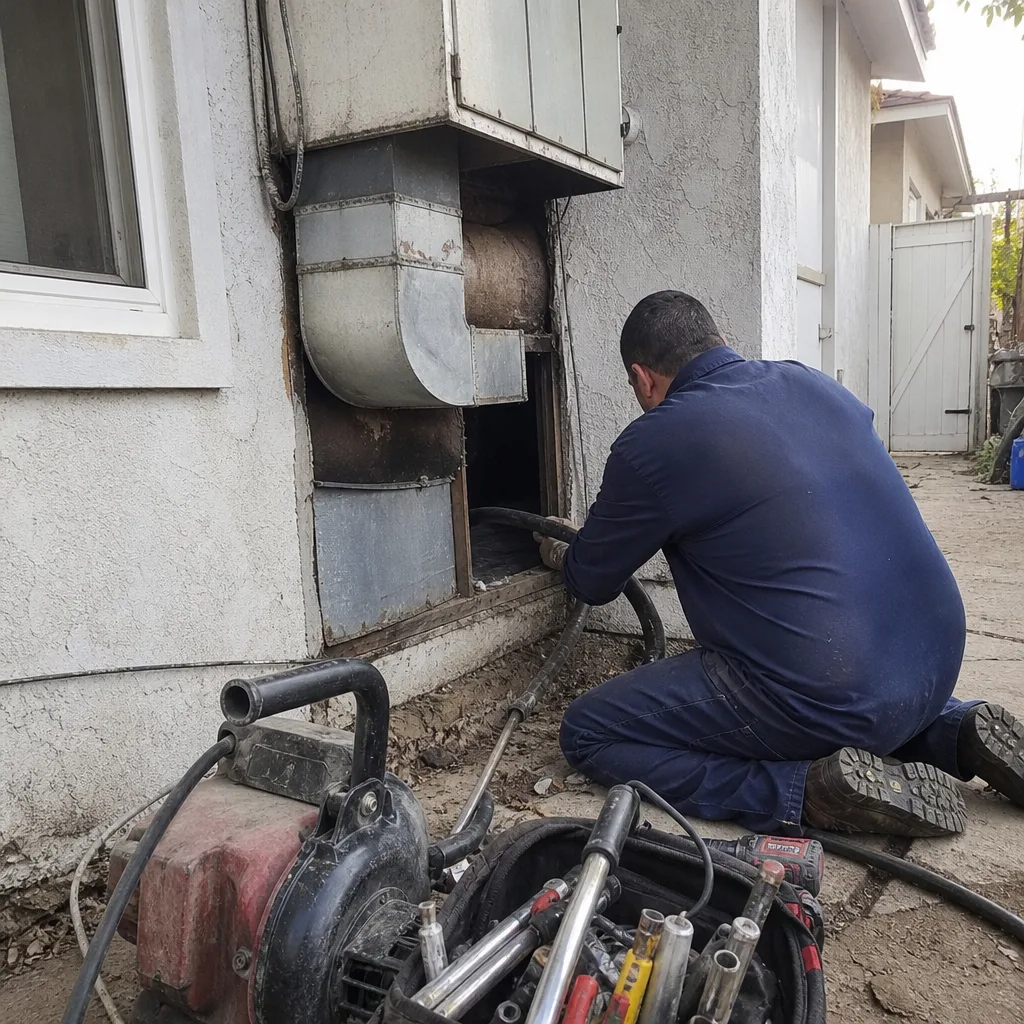 Before
 After
 Before
 After
 Before
 After
When to Call a Professional
Some duct issues are visible and assessable from the homeowner’s side. Others require professional equipment to diagnose and address properly. Call a professional when you see visible dust blowing from registers during normal operation, smell persistent odors (smoke, mustiness, or stale air) that don’t resolve after filter changes, notice unexplained increases in dust accumulation throughout the home, or experience uneven heating and cooling that isn’t explained by thermostat or HVAC equipment issues. If you’re in Rancho Park, Air Duct Cleaning in Rancho Park offers free estimates. Call (855) 974-1911 to schedule an inspection and get a clear picture of what’s actually happening inside your ducts.
Frequently Asked Questions
Air duct cleaning in Rancho Park typically ranges from $350 to $800 for a standard single-family home, depending on the number of vents, the size of the system, and the level of contamination. Honest, detailed pricing requires an inspection of the actual system, and estimates should be free. Call (855) 974-1911 for an exact quote.
Lower quotes usually mean less thorough work: a smaller vacuum system without negative-air containment, shorter cleaning time, or a “blow-and-go” approach that disturbs dust without extracting it. Remediation-grade equipment and proper containment cost more to operate, and that cost reflects in the quality of the result.
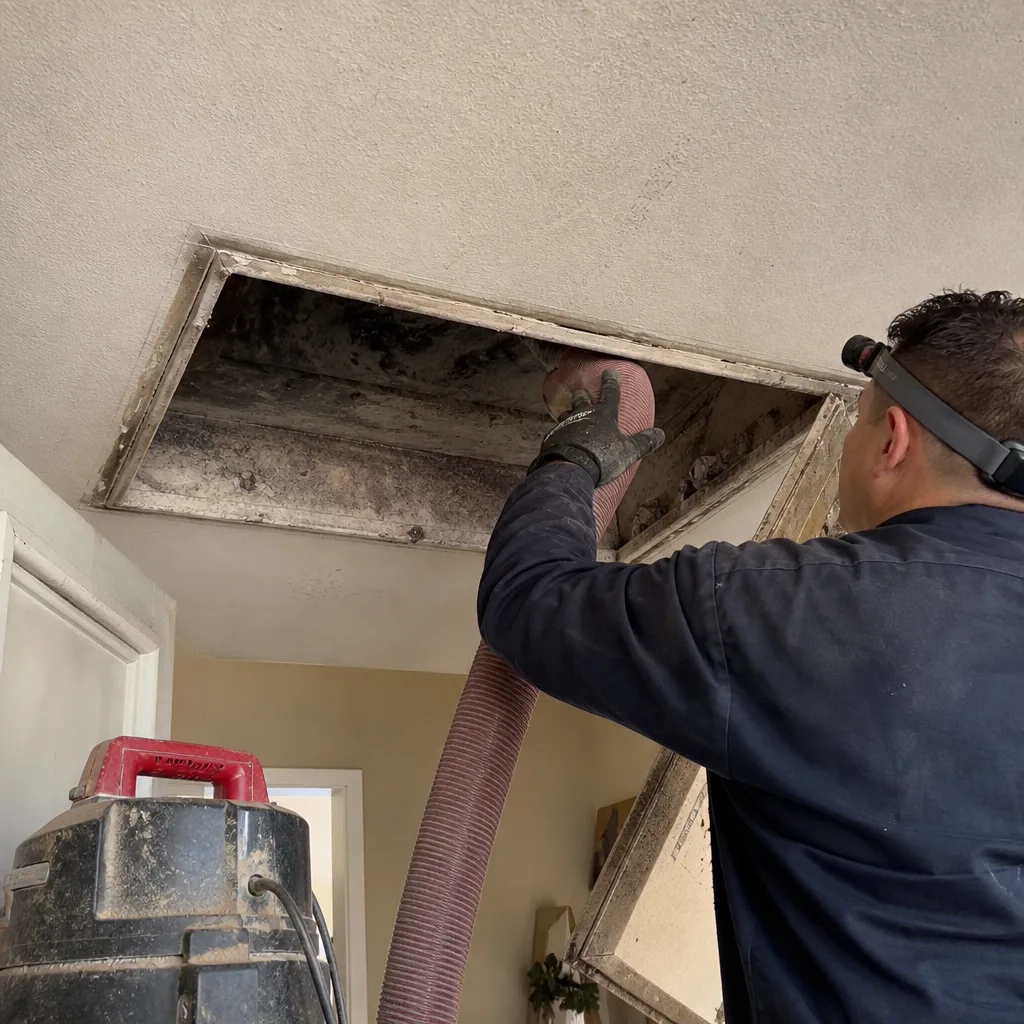
Request before-and-after photos of the interior duct surfaces. A professional cleaning should produce visible, documented results, including images from inside the duct runs, not just register-level before-and-after shots. We provide documentation of what was removed and what the interior looks like after the job.
Yes. June Gloom brings elevated relative humidity to Rancho Park, and when that moisture combines with accumulated dust and organic material inside ducts, mold growth can become established. The risk is highest in systems with significant existing accumulation, which is another reason spring cleaning makes sense in Los Angeles.
Yes. Wildfire smoke particles are extremely fine and pass through most standard filters. Once inside the system, they adhere to duct surfaces and accumulated dust, creating a lingering smoke smell that persists long after the outdoor air has cleared. Professional cleaning with proper equipment is the most effective way to remove smoke residue.
Most households should have the dryer vent cleaned annually. The dryer vent is separate from the HVAC duct system and accumulates lint at a much faster rate. Our Dryer Vent Cleaning in Rancho Park service addresses this separately, because lint accumulation is a fire risk that deserves its own dedicated attention.
The Bottom Line
Rancho Park’s seasonal cycle creates specific, predictable challenges for duct systems: spring preparation, summer smoke, fall Santa Ana dust loading, and a brief June humidity window. A seasonal care plan that accounts for these local conditions means cleaner air indoors, a system that runs more efficiently, and fewer surprises when you switch between heating and cooling. Most homes benefit from professional cleaning every 3 to 5 years, with more frequent service for households with pets, allergy concerns, or recent smoke exposure. If you’ve never inspected your ducts or it’s been more than two years since they were cleaned, call Air Duct Cleaning Rancho Park at (855) 974-1911 for a free estimate and an honest assessment of what your system needs.
Written by the team at Air Duct Cleaning Rancho Park, serving Rancho Park since 2014.