
Last updated November 2, 2026
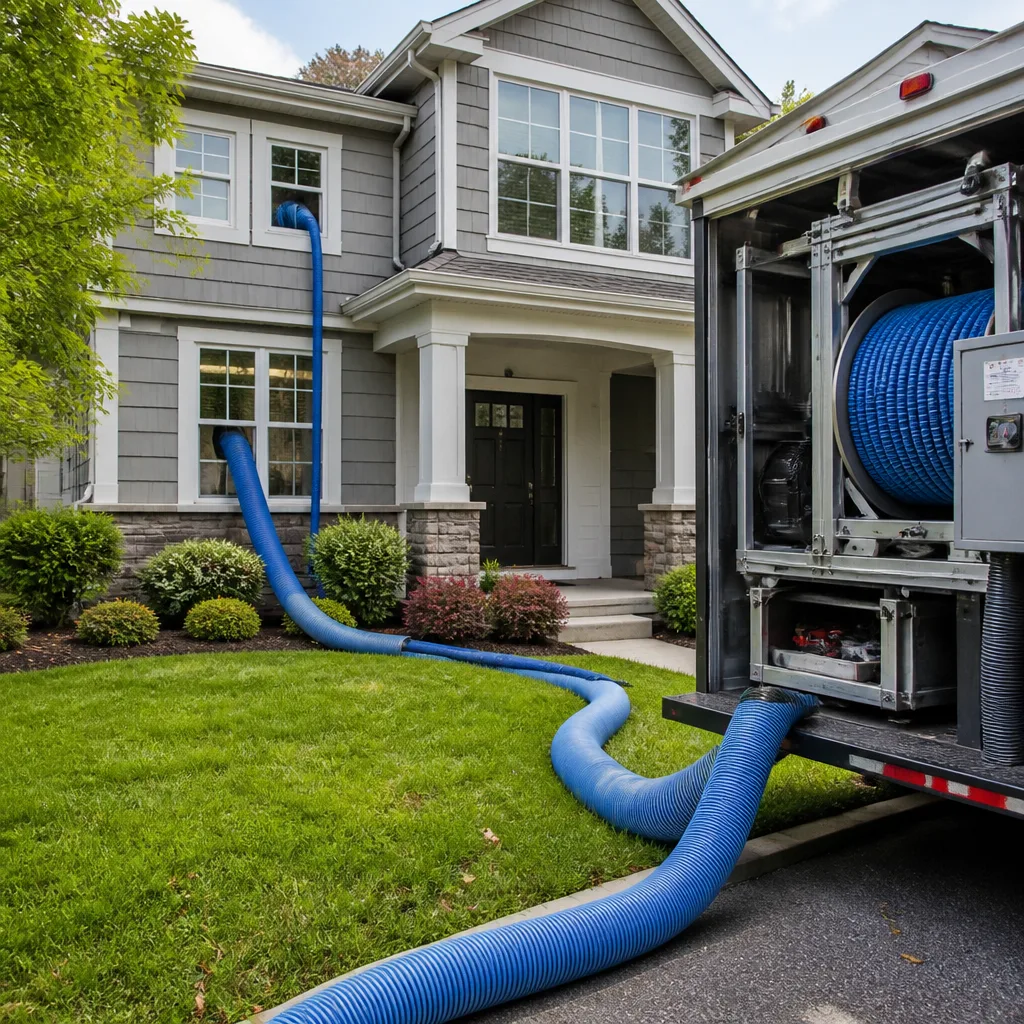 Whole-home duct cleaning
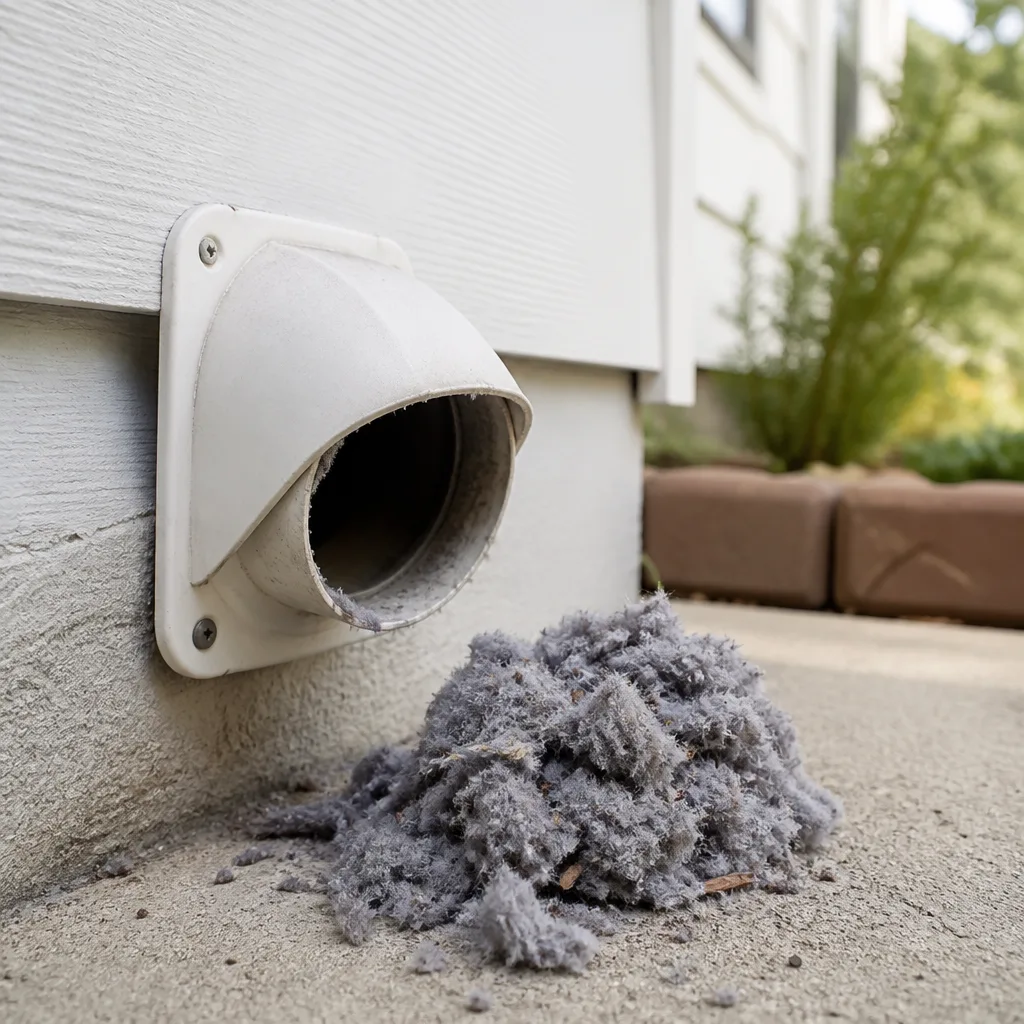 Dryer vent cleaning
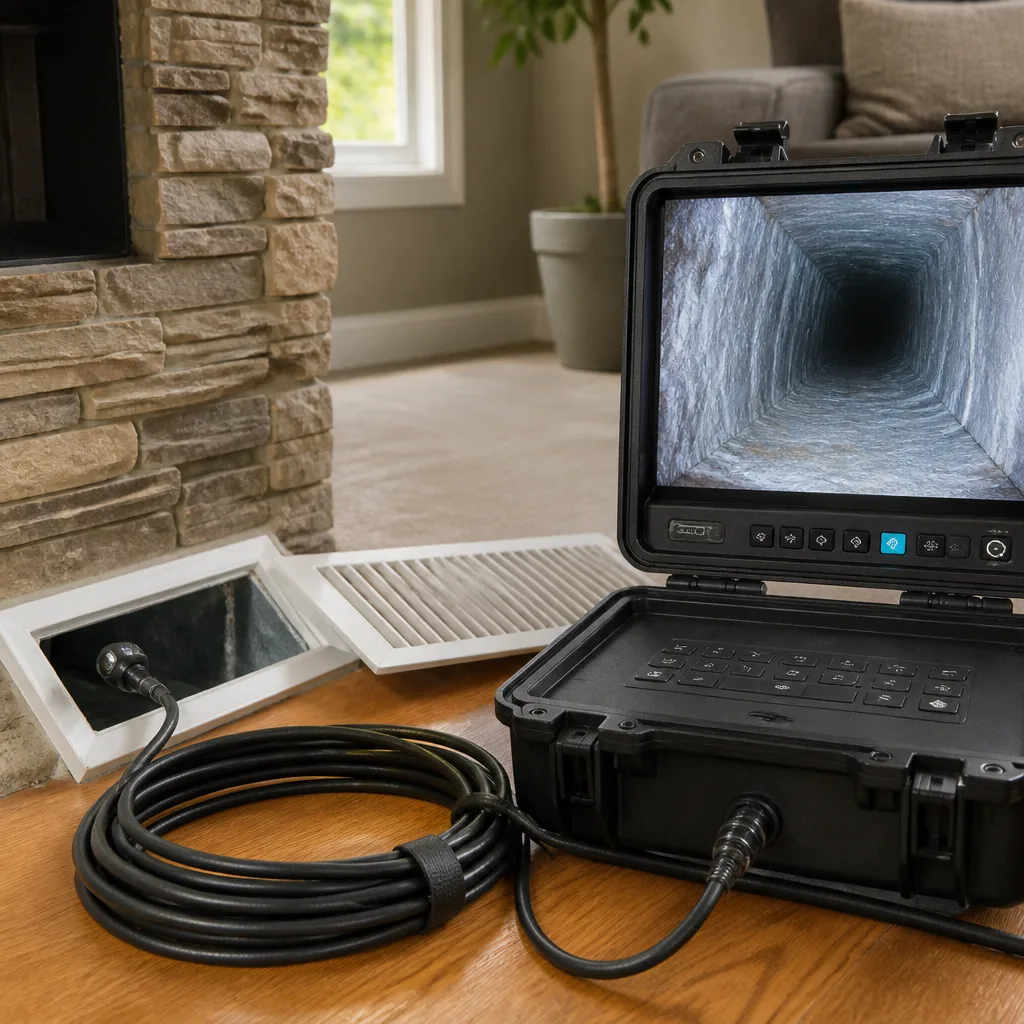 Camera inspection
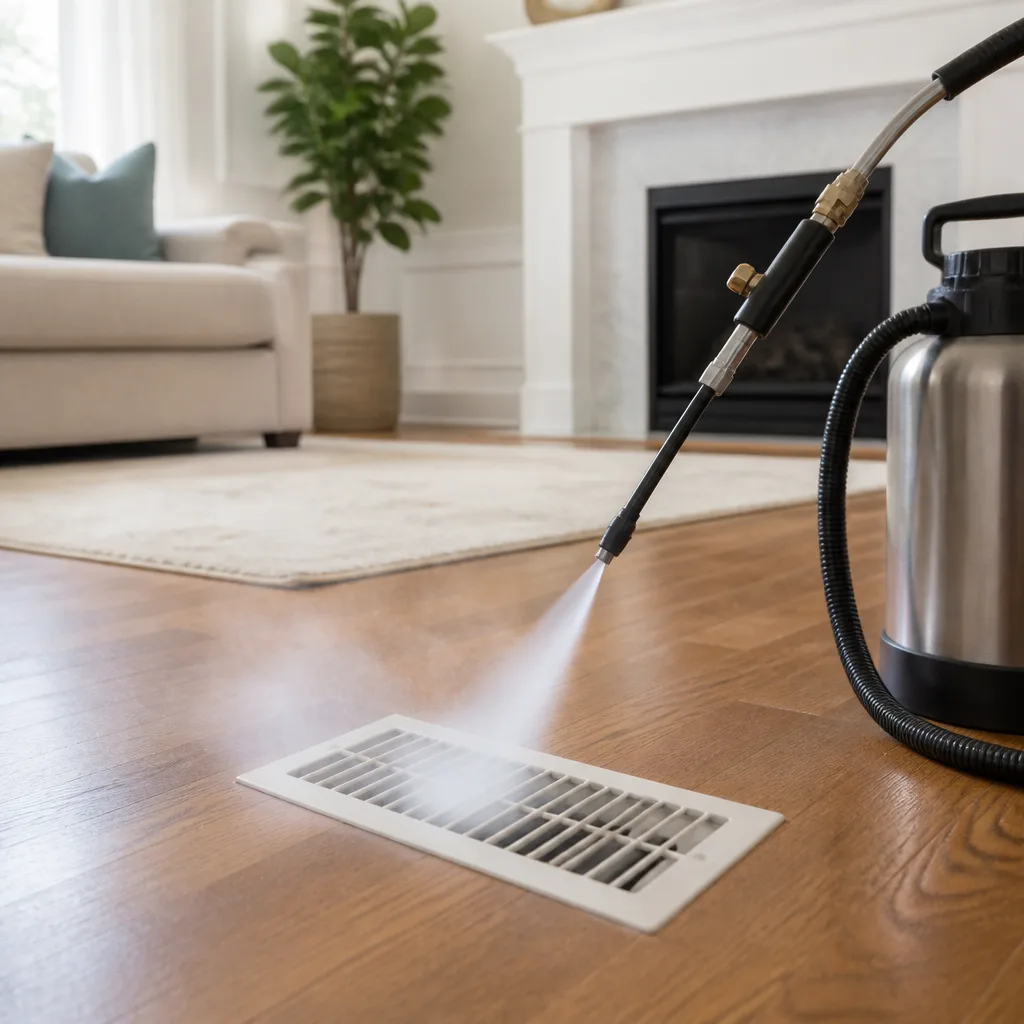 Sanitizing & deodorizing
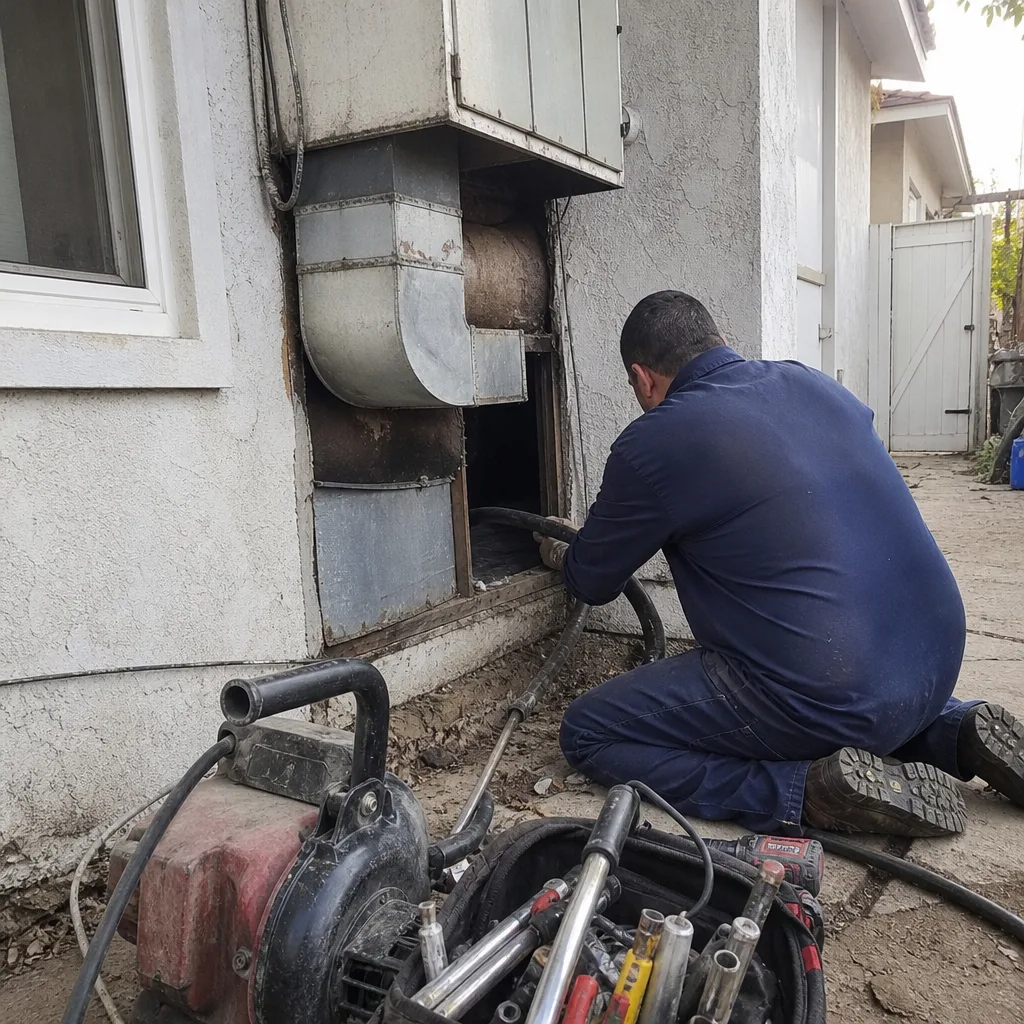
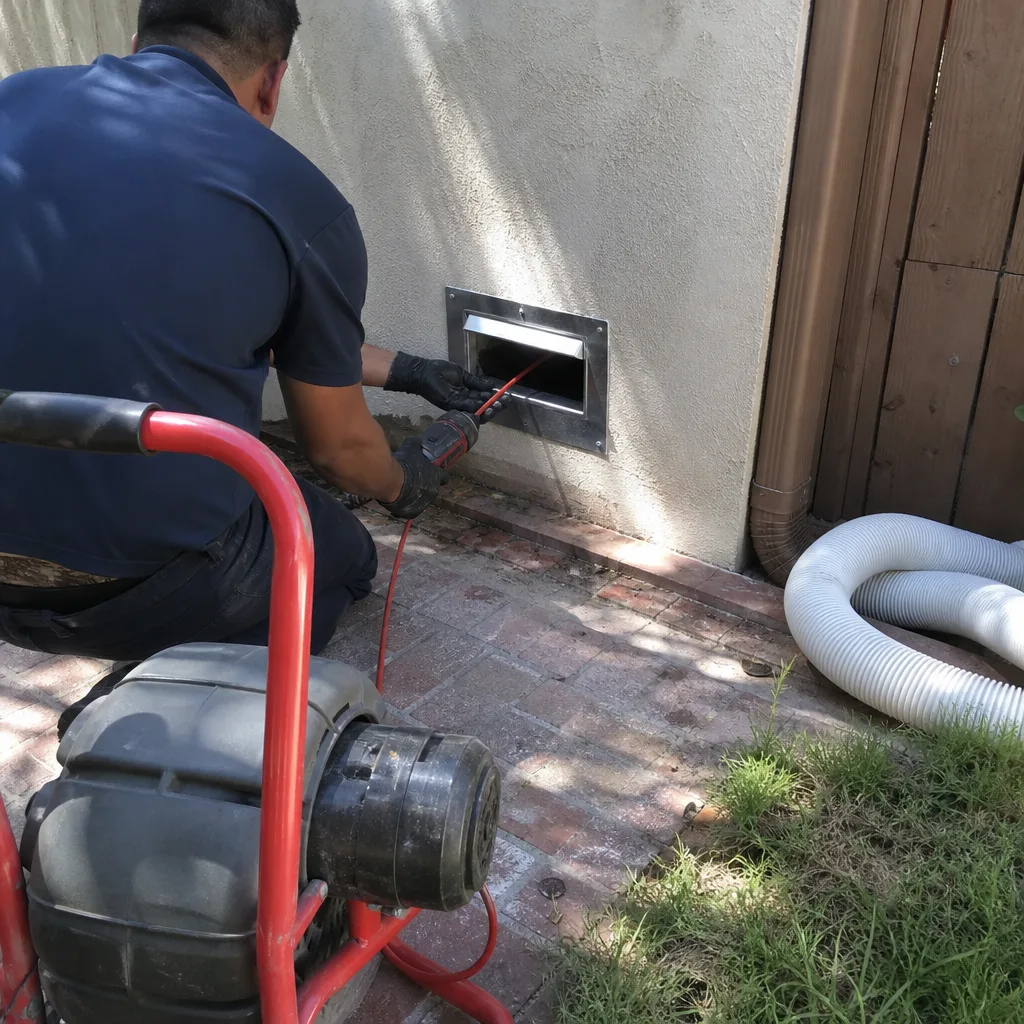
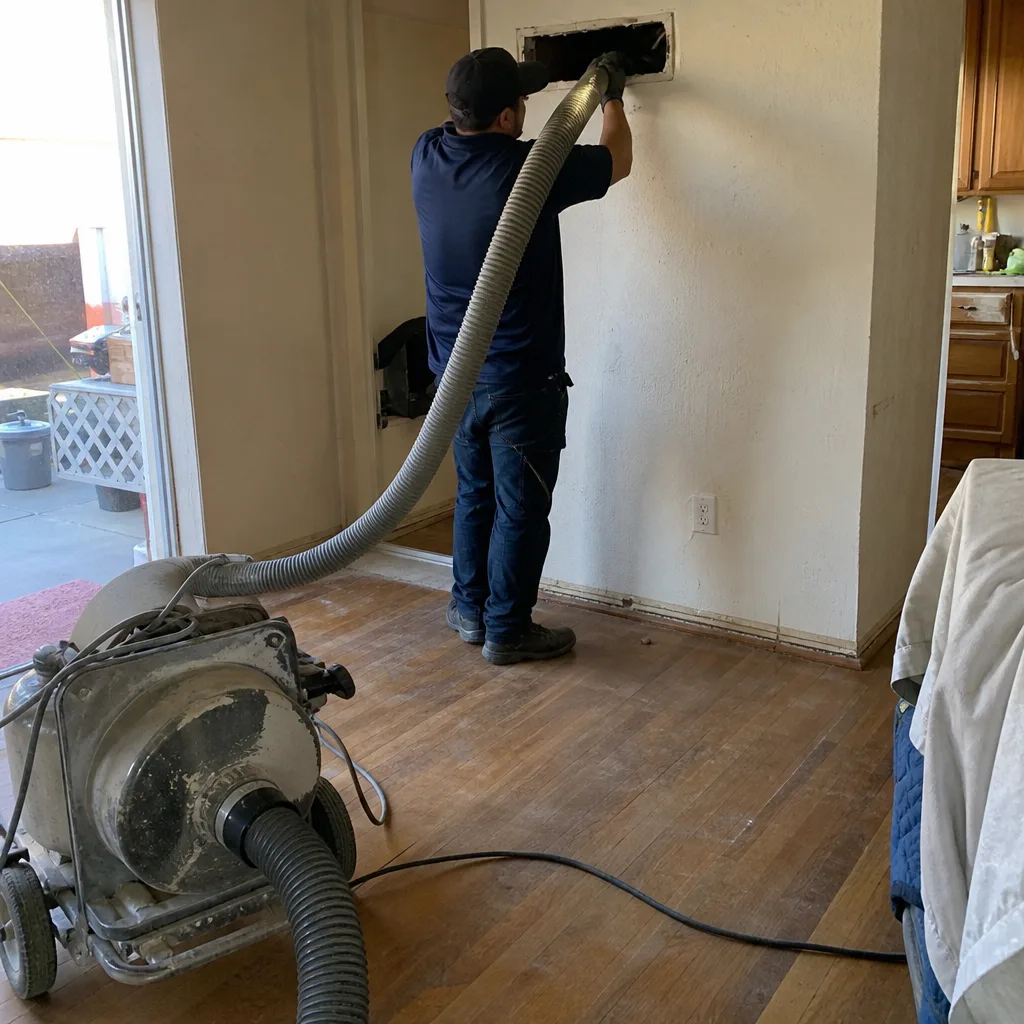
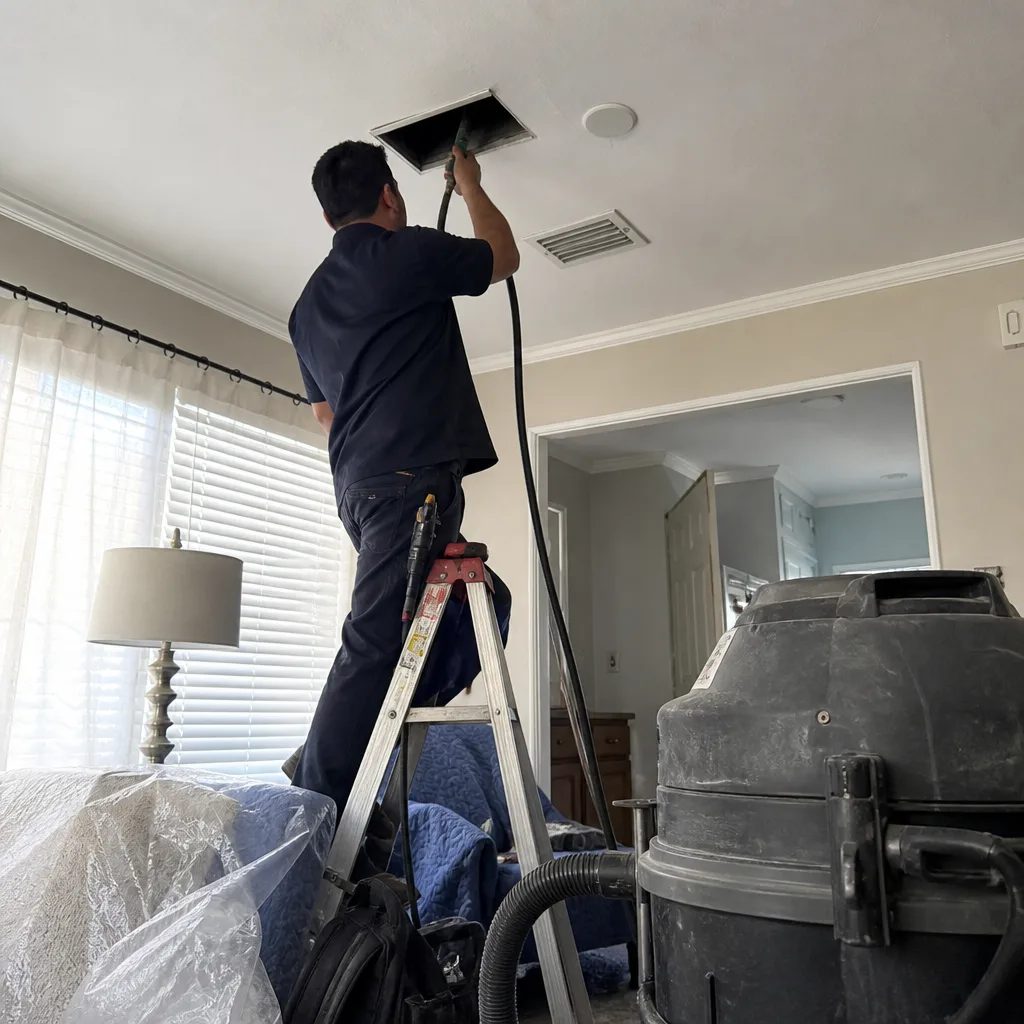
Whole-system duct and dryer vent check with before-and-after photos - you see exactly what came out of your vents
That "$99 whole-house special" is a bait ad - the real number appears once they are in your hallway, or the "clean" is a shop-vac at the register. We photograph the inside of your ducts before and after instead.
Air Duct Cleaning Emergency Preparedness Guide for Rancho Park Homes
Closing your windows when a wildfire warning hits Rancho Park buys you roughly twenty minutes of protection. After that, your HVAC system becomes the weak point. Most Rancho Park homeowners have evacuation bags, emergency water, and a family meeting spot mapped out. Almost nobody has a plan for their duct system. That’s a problem, because your ducts are the single largest pathway for smoke particulate to enter a sealed home and stay there long after the air outside clears. This guide covers what to do before, during, and after a smoke event, written from the perspective of a duct specialist who has seen what wildfire ash does to Rancho Park systems.
Quick Answer
During a wildfire smoke event in Rancho Park, set your HVAC fan to “ON” (not “Auto”) with a MERV 13 or higher filter installed, and shut the system down entirely if evacuation is ordered or if indoor air quality degrades despite filtration. After the event passes, have duct interiors inspected by a professional before running the system normally. Wildfire ash is chemically active and doesn’t behave like ordinary household dust; it settles into duct lining, corrodes metal components, and re-releases into living spaces for months if not removed properly.
Styles & brands we work with
- Whole-home duct cleaning
- Dryer vent cleaning
- Camera inspection
- Sanitizing & deodorizing
Table of Contents
- Pre-Emergency Duct Preparation for Rancho Park Homes
- What to Do With Your HVAC During a Smoke Event
- Sheltering in Place vs. Evacuation: Two Different Protocols
- Post-Event Duct Assessment: What Actually Needs Cleaning
- Why Wildfire Ash Is Different From Household Dust
- Documenting Smoke Exposure for Insurance Claims
- Common Mistakes to Avoid
- When to Call a Professional
Pre-Emergency Duct Preparation for Rancho Park Homes
Rancho Park sits close enough to the Santa Monica Mountains and the Sepulveda Pass corridor that wildfire smoke can arrive with little warning, especially during Santa Ana wind conditions from late summer through fall. The time to prepare your duct system is not when the Air Quality Index tips past 150. It’s now, while skies are clear and you have time to make deliberate upgrades.
We recommend Rancho Park homeowners take these steps before fire season begins:
- Upgrade to a MERV 13 or higher filter. Standard fiberglass filters (MERV 4 or lower) stop large debris but let fine smoke particles pass through as if the filter weren’t there. A MERV 13 filter captures particles down to 0.3 microns, which includes most wildfire smoke particulate. Keep at least one spare on hand during fire season. Note that higher filtration adds resistance; most modern systems handle MERV 13 without issue, but older Rancho Park homes with original equipment may need an airflow check first.
- Seal visible duct leaks in accessible areas. The attic runs and crawl spaces common in Rancho Park’s mix of mid-century ranch houses and newer construction are prime locations for separated joints, loose connections, and gaps at register boots. Every leak is a direct route for smoke-laden outdoor air to bypass your filter entirely. A duct repair in Rancho Park addresses these gaps before they matter most.
- Have your ducts inspected and cleaned if it’s been more than three to five years. Ducts with existing debris accumulation trap smoke particulate more aggressively than clean systems. Think of it as the difference between running smoke through a clean pipe versus one lined with sticky residue. If you’re unsure of your system’s history, a professional air duct cleaning in Rancho Park establishes a clean baseline before fire season starts.
- Document your system’s pre-existing condition. Take photos of your furnace filter, visible duct runs, and any existing damage or staining. If you file an insurance claim for smoke damage later, you’ll need to prove what the system looked like before the event.
One thing we emphasize to Rancho Park clients: the fan setting matters as much as the filter. On “Auto,” the fan cycles off when the thermostat reaches temperature, which means long stretches with no active filtration. During a smoke event, we’ll explain below why that’s a liability.
What to Do With Your HVAC During a Smoke Event
When an air quality alert is active for the Rancho Park area and smoke is visible or the AQI exceeds 100, your HVAC system needs active management. The default settings that keep your home comfortable on a normal day are not the settings that protect your ducts and indoor air during a smoke event.
Here is the sequence we recommend:
- Close all windows and doors immediately. This includes the small bathroom and kitchen windows that often stay cracked open in Rancho Park’s coastal climate. Smoke follows pressure differentials, and any opening pulls particulate toward it.
- Switch the thermostat fan from “Auto” to “ON.” Continuous fan operation means air is always moving through your filter, capturing smoke particulate that enters through doors, windows, and minor gaps. On “Auto,” you’re filtering only during heating or cooling cycles, which may be infrequent on mild days.
- Close the fresh air intake damper if your system has one. Many Rancho Park homes with newer construction or recent HVAC upgrades include a fresh air intake for ventilation. During smoke events, this damper should be closed to minimize outdoor air introduction. The location varies by system; if you haven’t identified it before an emergency, ask during your next service visit or plan a pre-season inspection.
- Monitor indoor air quality. If you have an indoor air quality monitor, watch the PM2.5 readings. If indoor levels climb above 35 µg/m³ and continue rising despite filtration, shut the system down entirely and seal off the most-used room. If you don’t have a monitor, pay attention to visible haze, smoke odor, or increasing eye and throat irritation indoors. These are signs your filtration is being overwhelmed.
- Do not run exhaust fans unnecessarily. Bathroom fans, kitchen range hoods, and dryer vents all create negative pressure that pulls outdoor air in through whatever gaps exist in the building envelope. During a smoke event, minimize their use. If you must cook, use the range hood sparingly and shut it off immediately after.
The goal during the event is simple: keep as much smoke out of the duct system as possible while still filtering indoor air. Every hour of unfiltered outdoor air cycling through your returns and supply runs deposits fine particulate deep in the system, where it will remain after the smoke clears unless professionally removed.
Sheltering in Place vs. Evacuation: Two Different Protocols
The actions you take with your HVAC system depend entirely on whether you’re staying or leaving. These protocols serve different objectives, and confusing them is common. We see the aftermath in Rancho Park homes after every significant smoke event.
If You’re Sheltering in Place
Sheltering in place means you’re staying home, and your HVAC system is your primary line of defense. The objective is continuous filtration and positive indoor pressure where possible.
- Keep the fan on “ON” with a MERV 13 filter installed.
- Run a standalone HEPA air purifier in the main living area and bedrooms if you have them. The Honeywell HEPA units many Rancho Park residents already own work well in tandem with a properly filtered central system.
- Seal the gap under exterior doors with damp towels. Rancho Park’s older homes, particularly the 1950s and 60s ranch houses south of Pico, often have noticeable door gaps that act as smoke entry points.
- Reduce heat-generating activities (ovens, dryers, long showers) so the system isn’t cycling frequently. Every cycle pulls return air, which in a leaky house means some smoke-contaminated air from wall cavities and attic spaces.
If Evacuation Is Ordered
When an evacuation order is issued for Rancho Park or adjacent zones, the protocol changes completely. You’re no longer managing filtration; you’re minimizing what the system pulls in while you’re gone.
- Shut the HVAC system down completely. Switch the thermostat to “Off.” Do not leave the fan running on “ON” or “Auto.” The goal here is zero air movement, which means zero new smoke pulled into the ducts through leaks and returns while the house is unoccupied.
- Close all supply registers and return grilles. This adds a secondary physical barrier at the room level. It doesn’t seal the system, but it reduces passive air exchange through the ductwork.
- Close the fresh air damper if accessible. Same as during shelter-in-place, but more critical here because no one is home to respond if smoke enters.
- Shut off the gas at the meter if directed by authorities. This isn’t a duct-specific action, but during Rancho Park evacuations, many homeowners are instructed to do this. It prevents the furnace from cycling during a power restoration if the thermostat fails to hold its setting.
- Upon return, do not restart the system immediately. If smoke entered the home, running the HVAC will distribute accumulated particulate throughout the living space and drive it deeper into the ductwork. Open windows first if outdoor air has cleared, then assess. More on this in the post-event section below.
The difference comes down to this: sheltering in place uses the system as a filter; evacuation leaves the system dormant to minimize contamination. Mixing them up means either inadequate filtration while present or active smoke circulation while absent, and both lead to the same outcome: a duct system loaded with wildfire particulate.
Post-Event Duct Assessment: What Actually Needs Cleaning
After the outdoor air clears and you’re back home in Rancho Park, the question we hear most is: how do I know if my ducts actually need cleaning, or is a filter change enough?
The honest answer depends on several factors: the duration and intensity of smoke exposure, whether the system ran during the event, the age and condition of your ductwork, and the filter quality you had installed. Here’s a practical assessment sequence you can work through:
- Replace the filter first. Whatever was installed during the event is now loaded with whatever it captured. Dispose of it in a sealed bag. Do not attempt to clean or reuse it. Install a fresh MERV 13 filter.
- Inspect accessible registers and returns with a flashlight. Remove two or three supply registers (the ones that blow air out) and look inside. If you see black or gray dust accumulation, sticky residue, or visible particulate on the duct surfaces beyond what was there before the event, that’s a strong indicator the system took in smoke. If you see significant debris inside the air duct cleaning Rancho Park home systems we service, professional cleaning is warranted.
- Check the blower compartment and evaporator coil area. If your furnace or air handler is accessible, open the filter slot and look at the blower fan. Ash and smoke residue collect here. A light gray film is expected after a smoke event; thick, gritty, or oily deposits indicate contamination that penetrated deep into the system.
- Smell test after running briefly. Replace the filter, turn the system back on, and run it for five minutes. If you smell smoke or a campfire-like odor that wasn’t present in the room before, that odor is coming from inside the duct system, not residual in the air. This is the single most reliable DIY indicator that duct cleaning is needed, because it confirms particulate embedded in the system is re-releasing into your supply air.
- Consider a professional inspection if any of the above indicators are present. A camera inspection of the duct interior shows exactly what’s in there: ash deposits, debris accumulation, moisture issues caused by firefighting water or high humidity during the event. This is not something you can assess by looking through a register.
If you went through an evacuation and the system was off the entire time, your ducts may have minimal contamination, particularly if doors and windows were closed and the fresh air damper was shut. If you sheltered in place with the fan running continuously for days, assume the system captured significant particulate and at minimum needs inspection. The filter did its job; that means the filter is loaded, and some fraction of what got past it is now in the ducts.
Why Wildfire Ash Is Different From Household Dust
This is the part most generic duct cleaning articles skip, and it’s the reason post-wildfire duct contamination in Rancho Park homes needs to be treated differently from routine cleaning.
Household dust is mostly inert: skin cells, fabric fibers, pet dander, pollen, and tracked-in soil. It accumulates gradually, sits in duct lining, and can be cleaned with standard agitation and vacuum methods. Wildfire ash is chemically and physically different in several meaningful ways:
- Wildfire ash is highly alkaline. Depending on what burned (homes, not just vegetation, in many Southern California fires), ash pH can run between 9 and 13. That alkalinity means it doesn’t just sit on surfaces; it reacts with them. On metal duct components, prolonged contact can accelerate corrosion, especially in Rancho Park’s coastal air, which already carries some salt. On fiberglass duct lining, alkaline ash bonds to the surface and resists standard removal methods.
- Particle sizes are extremely fine. A significant fraction of wildfire smoke particulate is under 2.5 microns, and a meaningful portion is sub-micron. These particles penetrate deeper into duct systems than household dust, settling into micro-crevices, flex duct ridges, and plenum corners where standard cleaning equipment may not reach without specialized tooling.
- Ash is not inert. Wildfire smoke contains volatile organic compounds (VOCs) and semi-volatile organic compounds (SVOCs) that off-gas over time. Even after the visible smoke clears, chemically active compounds can remain, contributing to lingering odor and potential indoor air quality issues for months if the particulate isn’t removed.
- Ash is hygroscopic. It attracts and holds moisture. In Rancho Park’s marine layer conditions, particularly during May Gray and June Gloom stretches, this means ash in your ducts can become slightly damp, then sticky, then concrete-like as it dries again in cycles. What starts as loose powder becomes an adhered film that standard vacuuming alone won’t remove.
This is why a professional air duct cleaning in Rancho Park after a significant smoke event involves more than running a vacuum through the system. It requires agitation that breaks the bond between ash and duct surfaces, extraction under negative pressure so dislodged material doesn’t redeposit in the home, and often a second pass on areas where the alkaline residue has adhered aggressively. We use Nikro and Rotobrush equipment for this work, paired with Abatement Technologies negative-air containment to keep the dislodged ash from spreading through the home during extraction.
Documenting Smoke Exposure for Insurance Claims
If you’re filing an insurance claim for smoke damage to your Rancho Park home, your duct system may be covered, but only if you can demonstrate that contamination occurred and that it requires professional remediation. Insurance adjusters are understandably skeptical of duct cleaning claims after smoke events because documentation is often poor. Here’s how to build a claim that gets approved.
Document everything in real time. The moment an air quality alert is issued for your area, start a dated log. Note when smoke was first visible, when you changed HVAC settings, when you replaced filters, and when you first noticed smoke odor indoors. Save screenshots of AQI readings from that period. If evacuation was ordered, save the official notice.
Photograph your filter before disposing of it. A smoke-loaded filter is the most direct evidence that your system was processing contaminated air. Take photos in good light showing the filter’s color compared to a fresh one. Keep the used filter in a sealed plastic bag until your claim is resolved.
Request a written inspection report with photo documentation. A professional duct inspection after a smoke event should produce a written report with camera images of the duct interior showing specific contamination. This is far more persuasive to an adjuster than the homeowner’s verbal description. The report should identify location, extent, and type of contamination, and recommend a specific remediation scope based on what was observed, not a generic cleaning recommendation.
Get a repair or replacement scope if damage is found. If the inspection identifies corrosion, deteriorated lining, or duct sections damaged by heat or moisture, these should be itemized separately from cleaning. Insurance policies often cover damage repair differently from cleaning, and mixing them in a single bid can complicate the claim.
Most Rancho Park homeowners we work with after smoke events have standard homeowners policies that include some coverage for smoke damage. The difference between approval and denial usually comes down to documentation quality and whether the professional evaluation is specific enough to demonstrate that contamination occurred during the covered event, not from years of deferred maintenance.
Common Mistakes to Avoid
- Running the HVAC system “as normal” during a smoke event and assuming the filter handles everything. A MERV 13 filter captures a meaningful percentage of smoke particulate, but it’s not a HEPA filter, and it does nothing for the air that enters through duct leaks upstream of the filter. In Rancho Park homes with attic duct runs, those leaks are common.
- Restarting the system immediately upon returning home after an evacuation without checking the duct interior. If smoke entered the home during your absence, the restart blast sends accumulated particulate through every register in the house in the first five minutes. Inspect before you run.
- Changing only the filter and considering the job done. The filter captures a portion of what passed through the return. The rest is now in the ducts. If you smell smoke when the system runs, changing the filter won’t fix it.
- Using a standard consumer-grade duct cleaning service that treats wildfire contamination like routine dust. Standard methods may leave alkaline ash deposits behind, and without proper containment, dislodged ash can redeposit in the home. This is the difference between a genuine remediation and a surface-level pass.
- Waiting months to address smoke odor, hoping it fades on its own. It doesn’t. Off-gassing from smoke residue continues, and the longer ash remains in the ducts, the more aggressively it adheres and the harder it is to remove. Rancho Park’s humidity cycles accelerate this adhesion.
- Failing to document the event for insurance because the smoke “didn’t seem that bad.” The adjuster reviewing your claim six weeks later has no idea what the conditions were. Your contemporaneous documentation is the difference.
- Neglecting the dryer vent after a smoke event. Your clothes dryer pulls air from inside the home and exhausts outside. During a smoke event, that exhaust path can accumulate residue, and a clogged dryer vent in Rancho Park is already a fire risk before adding smoke particulate to it.
When to Call a Professional
If you smell smoke when the HVAC runs, see visible ash or discoloration in the duct interior, or went through an evacuation and returned to a home that had smoke infiltration, a professional inspection is the right next step. These indicators mean contamination has penetrated beyond the filter and into the system itself. A camera inspection will show the extent and location, and a proper cleaning will address it. Air Duct Cleaning Rancho Park offers free estimates in Rancho Park. Call (855) 974-1911 to schedule an inspection. We’ll show you exactly what’s in your ducts before recommending any work.
See the difference
 Before
 After
 Before
 After
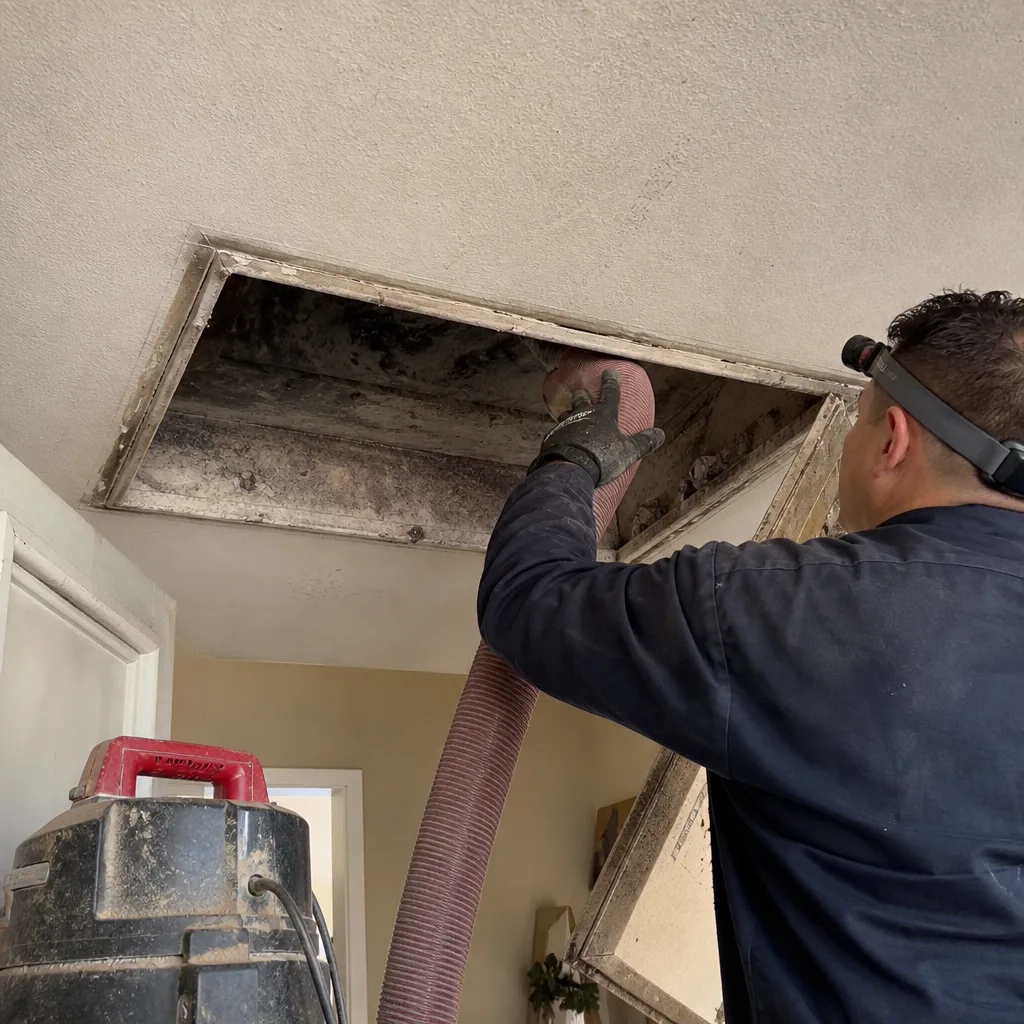 Before
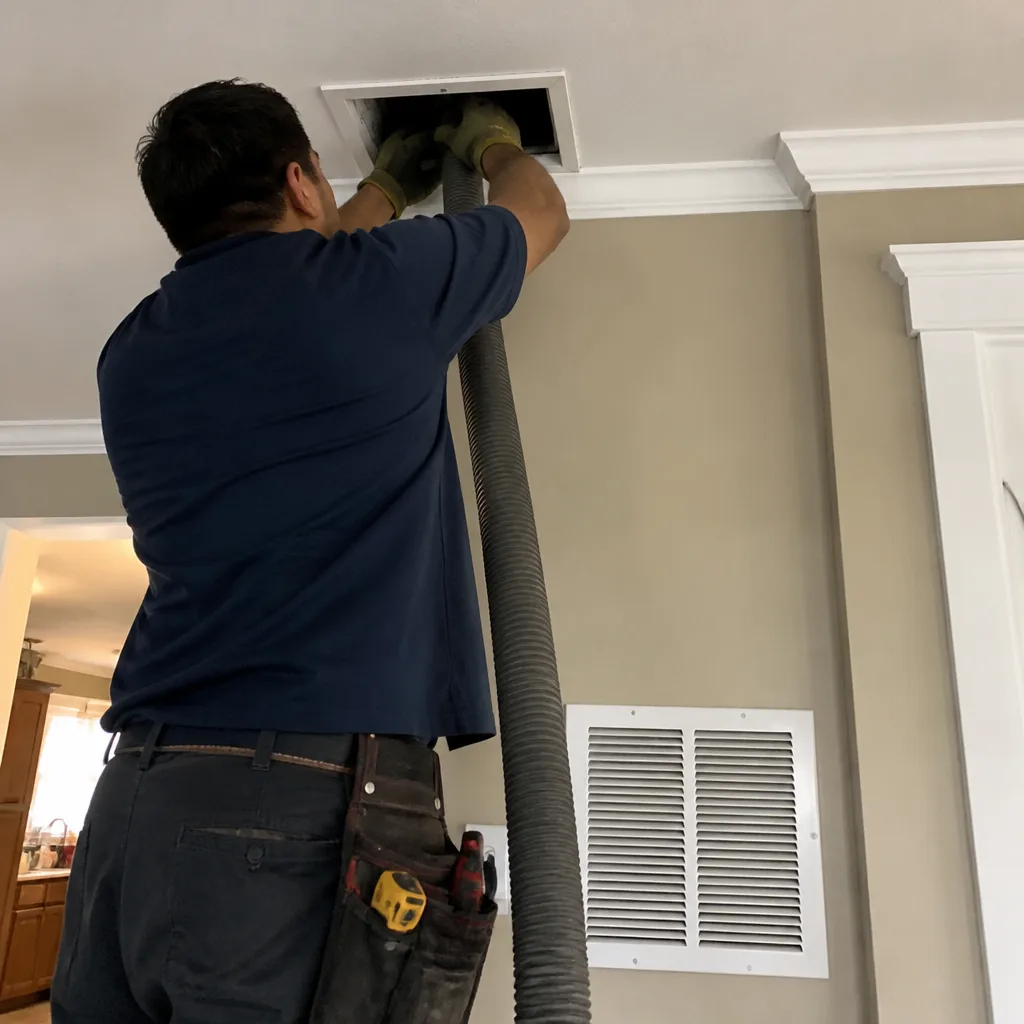 After
Frequently Asked Questions
Whole-home air duct cleaning in Rancho Park typically runs between $450 and $900 depending on system size, number of vents, and the level of contamination. Post-wildfire remediation may run higher if alkaline ash has adhered aggressively and requires extended agitation, multiple passes, or specialized treatment. The key is to get a flat price per system agreed before work starts, not a per-vent quote that can balloon once the technician is on site. Call (855) 974-1911 for an exact quote. Estimates are free.
A legitimate duct cleaning includes before-and-after camera documentation showing the interior of the duct runs before work begins and after extraction is complete. Any professional service should provide this without being asked. If the company cannot show you what your ducts looked like before and after, you have no way to verify the work, and that’s a red flag. We provide photo documentation on every job.
Low-ball duct cleaning quotes typically come from operations using consumer-grade or low-powered equipment, or companies that quote a teaser price and upsell aggressively once in the home. Proper cleaning requires professional agitation and extraction equipment, containment during the job, and the time to actually clean the full system. A $99 whole-house cleaning is not physically possible to do correctly with professional equipment. The pricing difference reflects equipment quality, scope of work, and whether the price you’re quoted is the price you’ll actually pay.
No. Standard homeowner tools cannot reach the interior of duct runs, cannot create the negative pressure needed to extract dislodged particulate, and cannot properly agitate adhered alkaline ash. Attempting DIY cleaning pushes material deeper into the system or dislodges it into the living space. Professional equipment from manufacturers like Nikro is designed specifically for interior duct access and contained extraction.
Under normal conditions in Rancho Park, every three to five years is reasonable for most homes. After a significant wildfire smoke event where the system ran during exposure, more frequent cleaning may be warranted, and a one-time inspection after the event is always a good idea regardless of your normal schedule. Homes with pets, recent remodeling, or residents with respiratory conditions may also benefit from shorter intervals.
Yes, a MERV 13 filter captures a meaningful percentage of smoke particulate (the same standard used in many portable HEPA units’ pre-filters), but it’s not a complete solution. Smoke that enters through duct leaks bypasses the filter entirely, and any filter will become saturated during extended exposure. The filter helps, the fan setting matters, and duct integrity determines how much unfiltered air enters the system. A MERV 13 filter is necessary but not sufficient during a significant Rancho Park smoke event.
The Bottom Line
Rancho Park homeowners plan for earthquakes, wildfires, and power outages. The duct system rarely makes the emergency plan, and after a smoke event, that’s the gap that shows up as persistent odor, worsening dust, and compromised indoor air for months afterward. The preparation is straightforward: a quality filter, sealed duct leaks, and a clean baseline before fire season. The response is equally straightforward: manage fan settings during the event, shut down if evacuating, inspect before restarting, and document everything for insurance. When smoke has entered the ducts, professional cleaning is not optional; alkaline ash will not simply blow through. Call Air Duct Cleaning Rancho Park at (855) 974-1911 for a free estimate if your system has been through a smoke event and you’re not sure what’s inside it.
Written by the team at Air Duct Cleaning Rancho Park, serving Rancho Park since 2014.